Installing a Heat Pump in a Low Basement
The coil would not fit above the oil furnace in this Wilmot basement. How we installed a ducted heat pump anyway, without a new panel or a service upgrade.
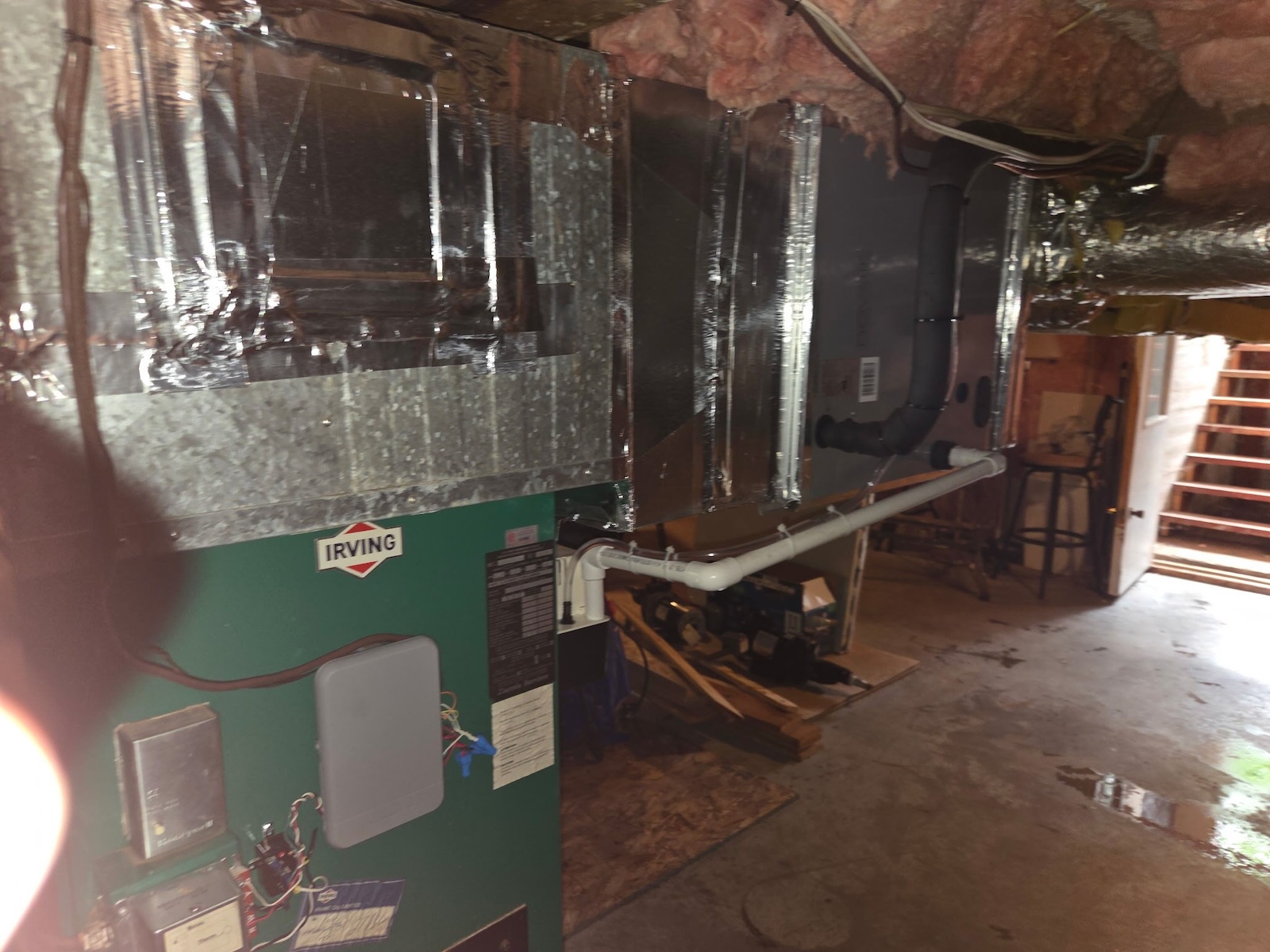
The coil did not fit.
Not tight. Not “we had to work at it.” It physically would not go into the space it was built for, and there was a crew standing in the basement of a house in Wilmot with a heat pump in the truck and nowhere to put it.
If you live in an older home in the Annapolis Valley you probably know that basement. Head height that makes a tall person duck. Ductwork run tight to the joists because that was the only place for it. An oil furnace that has been down there longer than most of the neighbours.
Homeowners with basements like that hear the same two things when they start asking about heat pumps. Your ceiling is too low for a ducted system. Your panel is full, so that is a service upgrade first.
Neither one turned out to be true here.
Can you add a heat pump to an oil furnace in an older Nova Scotia home?
Yes, and in this province it is one of the most sensible things you can do.
It is called a central add-on. Rather than ripping out your oil furnace, a heat pump gets added to the ductwork you already have. Same vents, same registers, same rooms. The heat pump does the heating for most of the year, and the furnace stays put for the coldest nights.
The word “ducted” matters. A wall-mounted head heats the room it is in and not much else. A ducted system heats and cools the whole house through the ducts that are already in your walls, which in an older home is usually the difference between an upgrade you notice and one you do not.
What if your basement ceiling is too low for a ducted heat pump?
This is where the job went sideways, so it is worth explaining what actually has to fit.
A ducted heat pump needs an A-coil, the part that sits inside your ductwork and does the actual heating and cooling. The normal home for it is the plenum, the boxy section of duct sitting directly on top of your furnace.
On install day the measurement did not work. The plenum was not tall enough to take the coil. With basement ceilings this low there was not enough room between the top of the furnace and the joists, and no amount of wanting it to fit was going to change that.
So our technician stopped, looked at the room rather than the drawing, and did something else.
He removed a length of ductwork running alongside the furnace, and installed the coil horizontally in the space that opened up. Same airflow path, same system, rotated ninety degrees, using room the house already had instead of trying to create height that was never going to exist.
“The height restriction called for thinking outside the box and coming up with an innovative solution, allowing the client to enjoy the comfort and efficiency of a modern ducted heat pump without sacrificing his trusted source for backup heat.” Joseph Bell, HVAC technician, TRALO Heating & Cooling
Low basement ceilings are not a reason you cannot have a ducted heat pump. They are a reason you need somebody who has seen a few of them.
Do you need to upgrade your electrical panel to install a heat pump?
Sometimes. Often not. And the honest answer is that nobody can tell you from the driveway.
Here is the thing most people get wrong, including some contractors. Empty slots in your panel are not the same as spare capacity in your service. You can have three free breaker spaces and still not have room for a heat pump, and you can have a panel that looks completely full and be absolutely fine.
The only thing that settles it is a load calculation. Somebody adds up what your home actually draws, compares it against what the service can carry, and tells you whether the heat pump fits. That calculation is also what the permit and the electrical inspection are based on, so it is not optional and it is not a formality.
On this job the calculation came back fine. The 100 amp service could carry the heat pump. The work was in the panel itself rather than in replacing the service, and it was permitted and inspected like any other heating circuit.
So if you have been told “your panel is full, that will be a service upgrade,” the right question back is: was that a load calculation, or a look at the panel door? They are very different answers and only one of them costs you thousands of dollars.
What this Wilmot heat pump installation actually involved
Most of what made this job go smoothly happened before install day.
The site visit flagged the panel and the coil clearance in advance, so both were priced into the quote rather than turning into a phone call and a change order halfway through.
It also sorted out the power run. The electrical mast sits on one side of the house and the best spot for the outdoor unit was roughly sixty feet away, so that run was measured, planned and scheduled up front.
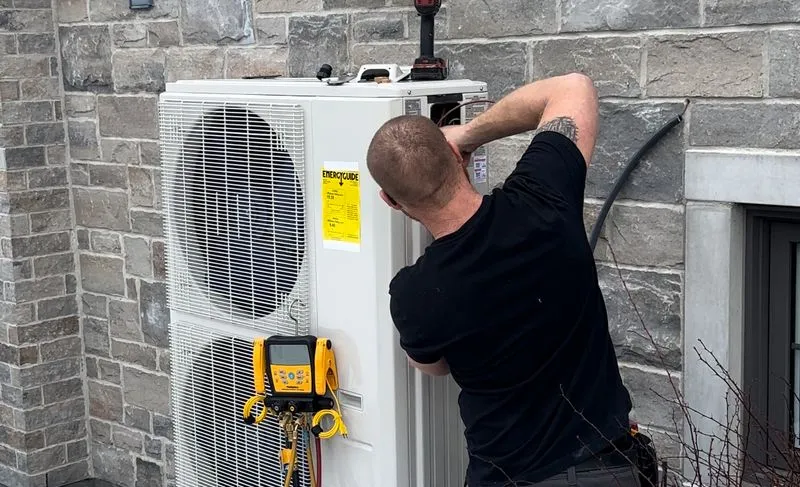
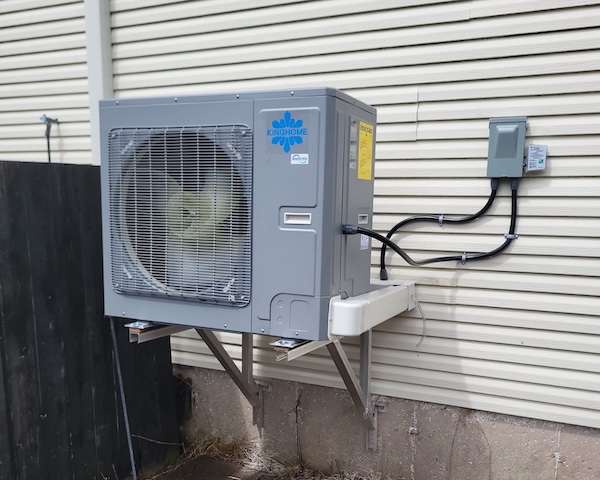
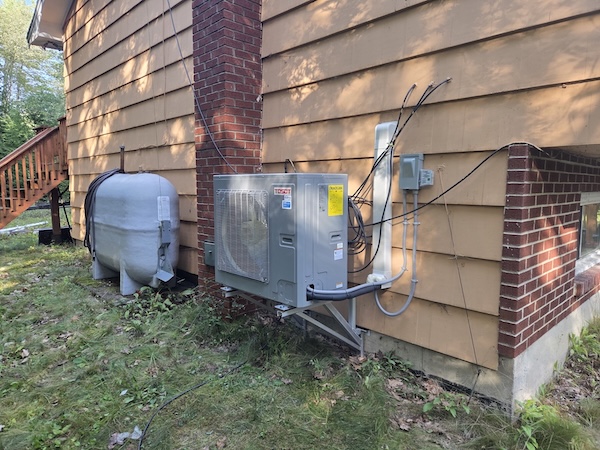
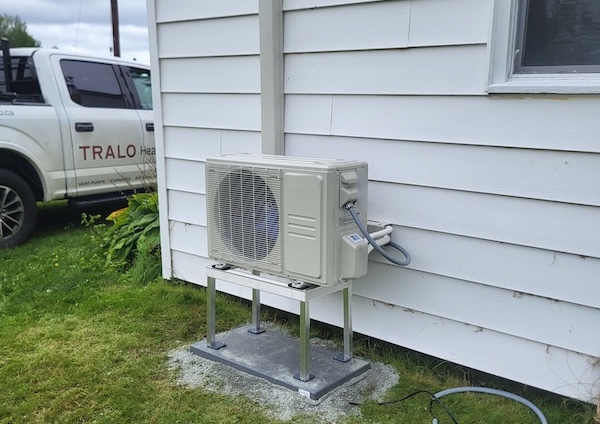
And it settled the mounting. The exposed foundation was an awkward shape for wall brackets, so the outdoor Novair unit went on a snow stand instead. In Nova Scotia that is usually the better call anyway. A unit sitting up out of the snow line keeps working through a February that would bury a ground-level one.
None of that is glamorous. It is the entire reason a proper site visit exists.
Does the oil furnace stay after a heat pump add-on?
It does, and that is the point of an add-on rather than a replacement.
The heat pump handles the great majority of the year. It is far cheaper to run than oil through the shoulder seasons and most of the winter, and it gives you air conditioning in the summer, which the furnace never did.
The oil furnace sits behind it as backup heat for the coldest stretches, the kind of night where you want something that does not care how cold it is outside.
You are not tearing anything out. You are adding a cheaper way to heat your house for most of the year and keeping what you already trust for the rest of it.
This TRALO install came with 10 years parts, 10 years labour and 10 years full replacement.
Been told your home cannot take a ducted heat pump?
Get a second opinion, and ask for the reasoning rather than the verdict.
If the answer is about your basement height, ask whether the coil can go in horizontally. If the answer is about your panel, ask whether a load calculation was done. If the answer is that your oil furnace has to come out first, ask why it cannot stay as backup heat.
Every one of those has an answer. You are entitled to hear it before you hear a price.
This case study was based on tech job notes from an installation by TRALO Heating & Cooling installed in Wilmot, Nova Scotia on August 17, 2026.
Equipment Installed
- Novair Plus outdoor heat pump
- Novair Plus cased coil, mounted horizontally
- Outdoor unit on a snow stand over patio stone
- Dedicated circuit and disconnect, approximately sixty feet from the panel
- Existing oil furnace retained as backup heat
- Line sets, ductwork modification, power hook up and drain line included in the quoted price