Two Thermostats, One Furnace, and a Tenant Upstairs
An Enfield building with an office below and a tenant above, sharing one oil furnace. How we added a heat pump and gave each floor its own thermostat.
Two thermostats. One oil furnace. An office downstairs and a tenant upstairs, both entirely convinced they should be in charge of the temperature.
And a 100 amp panel with fuses in it, which is usually where the heat pump conversation ends.
There are thousands of buildings like this one across Nova Scotia. A house that became two spaces. A shop below and an apartment above. A home office and a rental suite. One furnace, one set of ducts, and somewhere along the line somebody added a second thermostat so the upstairs would stop freezing.
It half works. The two floors pull against each other all winter and whoever reaches the thermostat first wins.
Can you put a heat pump in a building with two thermostats?
You can, but not by accident, and this is where a lot of quotes go quiet.
A standard heat pump add-on runs on conventional low-voltage controls, and those controls expect one thermostat calling at a time. Drop a heat pump into a two-thermostat system without solving that first and you have not ended the argument between the floors. You have given it a bigger budget.
What it needs is a zone panel, a controller that sits between the two thermostats and the one system and decides who gets what, so each floor can call for heating or cooling without dragging the other one along.
On this building that meant a Honeywell TrueZONE panel, two interface modules, and a new thermostat on each floor. Then each one was tested on its own, separately, to confirm it could run its own zone independently.
What if your building has a tenant or a separate suite?
Then independent control is not a nice-to-have, it is the whole job.
A tenant who cannot control their own temperature will either be cold and unhappy or will open windows in February and heat the street on your oil bill. An office that runs warm all afternoon while the apartment above sits empty is money going up the chimney.
The point of zoning a shared system is that each space asks for what it needs and nothing else. That is comfort for them and a smaller bill for whoever is paying it.
Do you need to upgrade your electrical panel to install a heat pump?
Sometimes. Often not. And the honest answer is that nobody can tell you from the driveway.
Here is the thing most people get wrong, including some contractors. Empty slots in your panel are not the same as spare capacity in your service. You can have three free breaker spaces and still not have room for a heat pump, and you can have a panel that looks completely full and be absolutely fine.
The only thing that settles it is a load calculation. Somebody adds up what your home actually draws, compares it against what the service can carry, and tells you whether the heat pump fits. That calculation is also what the permit and the electrical inspection are based on, so it is not optional and it is not a formality.
On this job the calculation came back fine. The 100 amp service could carry the heat pump. The work was in the panel itself rather than in replacing the service, and it was permitted and inspected like any other heating circuit.
So if you have been told “your panel is full, that will be a service upgrade,” the right question back is: was that a load calculation, or a look at the panel door? They are very different answers and only one of them costs you thousands of dollars.
What this Enfield heat pump installation actually involved
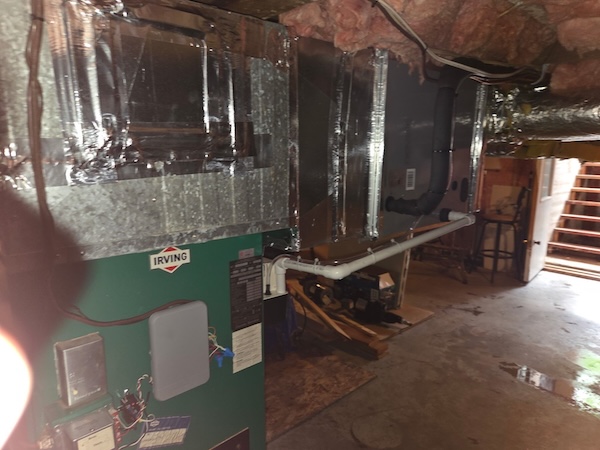
The building has a forced air Kerr oil furnace with existing zoned ductwork, so the bones were already there. It was the controls and the power that needed solving.
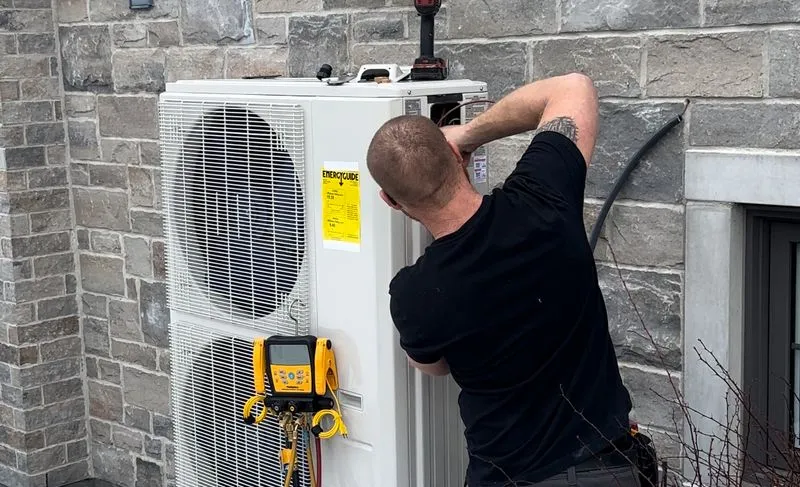
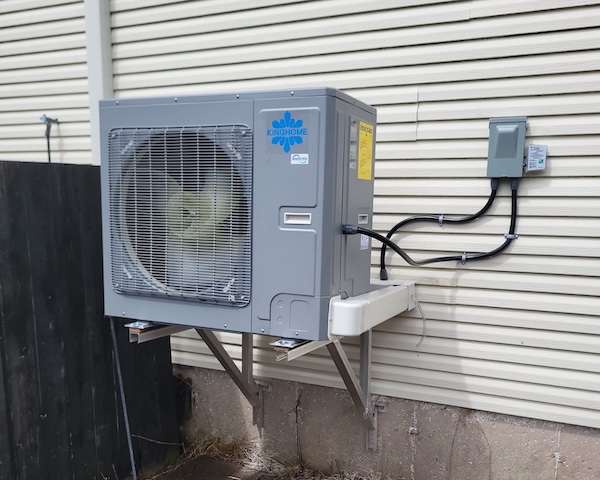
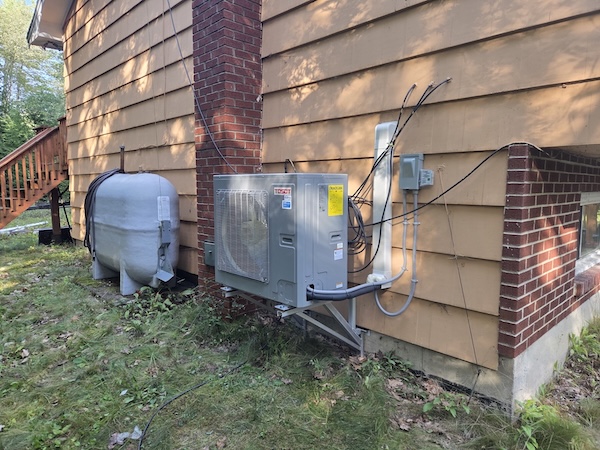
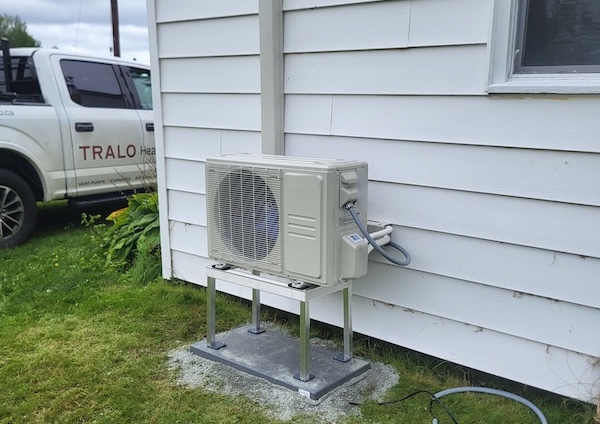
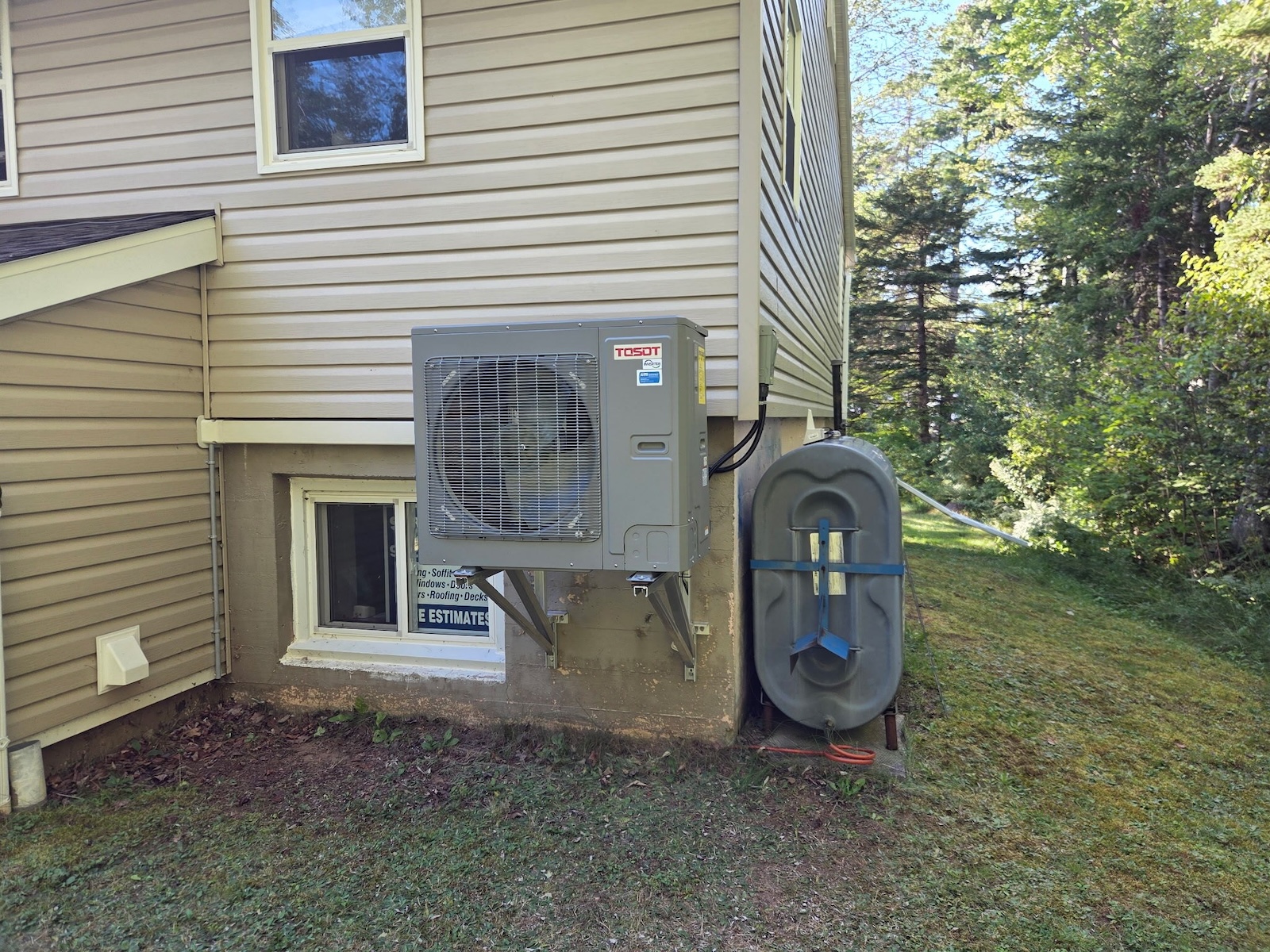
The heat pump went in on a Wednesday, tied into the existing ductwork, with the furnace left in place as backup heat.
The controls were a separate visit and the harder one. The existing zone dampers, the flaps inside the ducts that open and close each zone, were original to the building and neither of them wanted to talk to the new controls. One had to be rewired by hand before it would respond properly.
That step is in no install manual. It is what happens when somebody who has seen a lot of old zoned systems decides to solve the problem actually in front of him.
Where it landed: the office downstairs and the apartment upstairs each control their own temperature now, independently, through one shared heat pump and one shared duct system.
Does the oil furnace stay after a heat pump add-on?
It does, and that is the point of an add-on rather than a replacement.
The heat pump handles the great majority of the year. It is far cheaper to run than oil through the shoulder seasons and most of the winter, and it gives you air conditioning in the summer, which the furnace never did.
The oil furnace sits behind it as backup heat for the coldest stretches, the kind of night where you want something that does not care how cold it is outside.
You are not tearing anything out. You are adding a cheaper way to heat your house for most of the year and keeping what you already trust for the rest of it.
This TRALO install came with 10 years parts, 10 years labour and 10 years full replacement.
If this sounds like your building
You do not need a new panel to get a heat pump, and you do not need to tear out your oil furnace.
Worth a conversation if you have:
- An oil furnace you would rather keep than replace
- More than one thermostat on a shared duct system
- A 100 amp panel, or fuses instead of breakers
- Tenants or family who need to control their own space
Every one of those has an answer. The trick is finding it before the quote is written rather than after the crew is standing in your basement.
This case study was based on tech job notes from an installation by TRALO Heating & Cooling installed in Enfield, Nova Scotia on August 27, 2026.
Equipment Installed
- TOSOT Apex outdoor unit, TU36-24WADU, 3 ton central add-on
- TOSOT 24,000 BTU cased A-coil, TCAT24F
- Honeywell TrueZONE zone panel, two interface modules, two Honeywell TH8 RedLINK thermostats
- Existing Kerr forced air oil furnace retained as backup heat