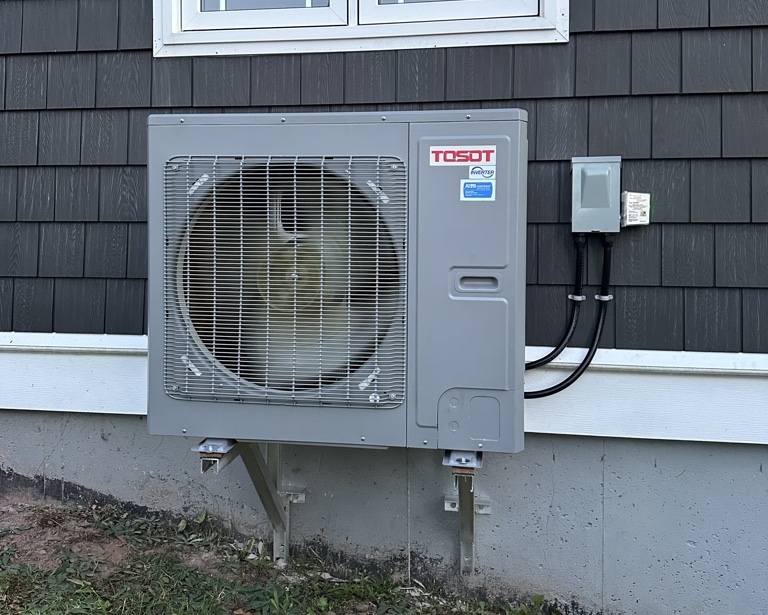
Halifax heat pump installation
TRALO™ helps Halifax and Nova Scotia homeowners move off oil, wood or electric baseboards to a cold-climate heat pump. Our advisors help you find the rebates you qualify for.
Most of our Nova Scotia jobs start with oil, wood or baseboards
A lot of homes here were built long before heat pumps were common. Some have an oil furnace and ducts. Some have a wood stove and electric baseboards. Plenty have no ducts at all.
A heat pump moves heat from outside air into your home in winter, and does the reverse in summer, so it also cools. It runs on electricity. In most homes we add it beside what you already have, rather than ripping anything out.
If you have ducts, a ducted heat pump can use them. If you do not, a ductless mini-split puts a slim indoor unit (called a head) on the wall of the rooms you use most. Your oil furnace or wood stove can stay as a backup for the coldest nights.
In HRM, most of the heat pumps we install are ductless mini-splits in homes moving off oil or electric baseboards, from Clayton Park and Spryfield to Dartmouth, Cole Harbour and Bedford. We also install across the Valley, the South Shore and northern Nova Scotia.
Many Nova Scotia heat pumps were put in by installers who are no longer around, and we often meet homeowners with a unit that no one will service. We're here for the long run, with a Dartmouth office and crews across the province, and every new install is backed by our written guarantees.
Why Nova Scotia homeowners choose TRALO™
We tell you if it will not pay off
If your home is small, already heats cheaply, or your system is newer, a heat pump may not save you much. We will say that plainly, even if it means no sale today.
Tricky homes are normal for us
Low basements, a full electrical panel, a wood-oil furnace, an oil tank in the basement. Our crews handle these every week across Halifax, Dartmouth and Bedford, the Valley, the South Shore and beyond.
Your advisor stays with you
From the first visit to the check-in after the install.
Signs a heat pump makes sense for your home
Not every home needs one. These are the signs we look for at the kitchen table.
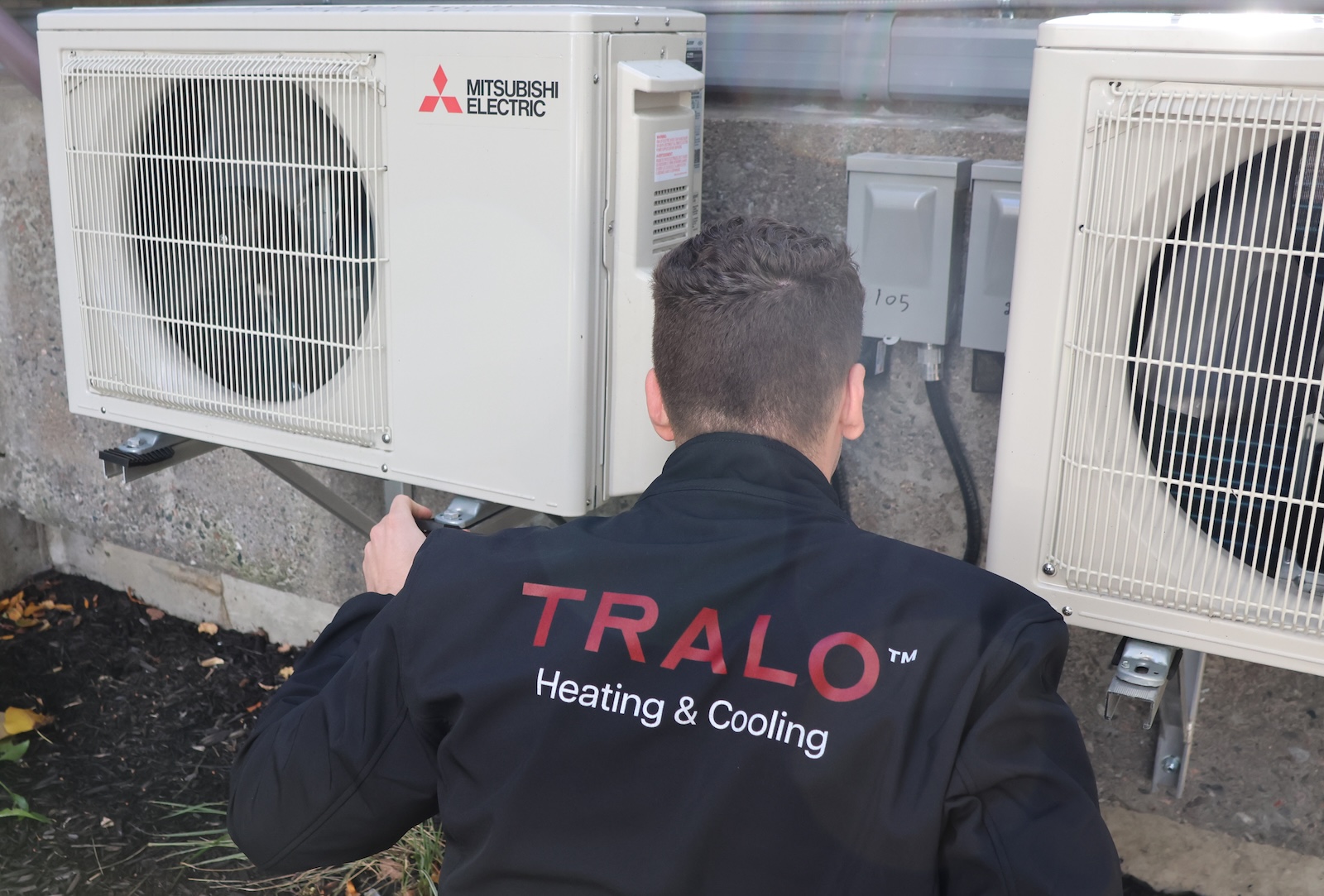
What to expect, from first call to final check
1. Free home assessment
Your advisor visits, looks at your heating, your basement, your panel and the rooms you use most, and asks how you live in the house.
2. Straight options
You get options in plain words, including keeping your oil or wood as backup. If it will not pay off, we tell you.
3. Paperwork handled
We help with financing, any program forms and scheduling. You get an update at each stage.
4. Professional install
Our crew installs the outdoor and indoor units, sets up your controls and shows you how to use them. We clean up before we leave.
5. Final check and follow-up
Your advisor follows up after the install to answer questions and make sure everything is running the way you expected.
Heat pump options for Nova Scotia homes
Ductless mini-split
Best for homes with baseboards, wood heat or no ducts. A slim wall unit heats and cools the rooms you use most, and one outdoor unit can run one, two or three of them. It's the most common heat pump we install in Nova Scotia.
Ducted heat pump added to your oil furnace
Have an oil or propane furnace with ducts? We add a heat pump coil to it. The heat pump does most of the heating and all the cooling through your existing ducts, and the furnace stays as backup. We've done this from Eastern Passage to Wilmot, even in low basements.
Full cold-climate system
Ready to move off oil completely? A cold-climate central heat pump with electric backup heats the whole home through a Nova Scotia winter, with no oil tank to fill.
Our TRALO™ guarantee
Every new heat pump install is backed by our No Lemons Guarantee: if two or more major parts fail in the first 24 months, we replace the whole system.
And no surprises: the price on your written quote is the price you pay.
Halifax heat pump reviews
Halifax heat pump questions we hear every week
For most Nova Scotia homes, yes. Homes heated with oil, propane or electric baseboards usually see the biggest drop, because a heat pump moves heat instead of burning fuel or turning power straight into heat. How much you save depends on your home and how you heat now. Your advisor will walk you through what to expect at your free assessment.
Yes, and for many Nova Scotia homes it's the setup we suggest first. The heat pump does most of the everyday heating and all the cooling, and your oil furnace runs mainly on the coldest nights. You buy less oil, and you still have a backup you already own.
Often, yes. Baseboards turn electricity straight into heat, while a heat pump moves heat from outside and uses less power to do it. A ductless heat pump in your main living area can take much of the load off your baseboards, which stay for backup. It also cools in summer.
It depends on your home. The price changes with how you heat now, how many rooms you have, whether you already have ductwork, and your electrical panel. That's why we offer a free assessment and give you a written quote showing the full price. We also have financing options, and we'll tell you which rebates you might qualify for. The best next step is a free assessment with one of our advisors.
Yes. Efficiency Nova Scotia offers rebates of up to $5,000 for a heat pump. And the new National Heat Pump Rebate offers up to $10,000 for eligible households, for installs from November 1, 2026. We'll check exactly what you qualify for during your free assessment and help with the paperwork.
Yes. You can pay outright or finance your new system and pay monthly. Rentals aren't offered in Nova Scotia. If paying over time matters to you, say so early and we'll build the quote around a monthly amount you're comfortable with. Your advisor puts your options side by side in writing at your free assessment, and there's no pressure to decide on the day.
Not always. It depends on the heat pump, any electric backup heat, and what else your panel already runs. Panel size alone doesn't decide it. We check your panel at the free assessment, and we've installed heat pumps on full panels without an upgrade. If you do need one, it's in your written quote.
Usually, yes. Low basements are common in older Nova Scotia homes, and we plan around them. In Wilmot, the coil wouldn't fit above the oil furnace, and we still installed a ducted heat pump. A ductless heat pump can also skip the basement entirely.
We look at each part of the house separately. Older sections and newer additions often heat differently, and many have no ducts. A heat pump with more than one indoor unit, or a mix of ducted and wall units, can cover the rooms you use while wood or oil stays as backup.
Yes. Wood-oil furnaces are common in rural Nova Scotia, and a heat pump can work beside one. You keep burning wood when you want to, oil stays as the backup, and the heat pump carries the house the rest of the time, including the days you don't feel like hauling wood.
Yes. In Enfield, we added a heat pump to a building with an office downstairs, a tenant upstairs, one oil furnace and two thermostats. Each floor kept its own control. Shared homes take careful planning, but they're very doable.
Think about it when your heat pump is 12 to 15 years old, needs a big repair, or can't keep up anymore. Many Nova Scotia homes have heat pumps put in 15 to 20 years ago by installers who are no longer around. If yours has no one looking after it, we can check it and give you an honest answer.
Most heat pumps last about 15 to 20 years. Yearly maintenance, a good install and the right size for your home all help it last longer. Coastal salt air and heavy use can shorten that. We'll tell you how yours is doing at your free assessment.
If two or more major parts of your new system fail in the first 24 months, we replace the whole system at no cost to you. Major parts include the compressor, coils, heat exchanger, reversing valve, fan and blower motors, and control board. Keep up with the recommended maintenance to stay covered. See our guarantees page for the full terms.
We serve homes across Nova Scotia from our Dartmouth office, including HRM, Truro and Windsor, the Annapolis Valley, the South Shore, Pictou County, Antigonish and Amherst. Most of our Nova Scotia work is outside the city, so rural homes are normal for us. Call (902) 446-0155 to check your address.
One of our advisors comes to your home, from a Dartmouth bungalow to a Valley farmhouse, and looks at your heating, basement, ducts and electrical panel. Then you sit down together and go through your options in plain words, including when a change isn't worth it. You get a written quote with the full price. It's free, with no pressure to sign.
There are two main ways. You can add a heat pump and keep your oil furnace as a backup, so you burn much less oil. Or you can replace oil heat fully. Your advisor looks at your home and explains which makes sense, then helps with the program paperwork.